

Pratapgarh Pure A2 Bilona Cow Ghee
Pratapgarh Pure A2 cow ghee is made from the milk of our own Sahiwal and Hariana cows — Indian breeds known for naturally rich and flavourful milk. Made from bilona churned makkhan at Pratapgarh Vedic Gau Gram, in limited batches. Deep gold in colour, soft and danedar. Open the jar and the warm familiar aroma comes to you first. Liquid gold as it melts on a hot roti.
₹2,599
- 4.8 from 30,516 Google reviews at our farm
- Proudly served to G20 Delegates
- Pratapgarh — 18+ years of trust
- Made at Pratapgarh Vedic Gau Gram
- Authentic Bilona Method
- Made from Makkhan
- Lab-tested Milk
- Made at Pratapgarh Vedic Gau Gram
Our cows. Our milk. Our ghee.
From Sahiwal, Hariana and Gir cows, milked at our farm: makkhan churned in our own bilona and simmered slowly until it turns liquid gold.
A2 ghee, from cows we know by name
-

A family tree for every cow
Lakshami, Rani, Vrinda and Gauri. Each one carries her own record — her dam, her sire, her dates, her yield. Rani's grandmother Noori gave 41.08 kilos of milk a day at her peak, and Rani's line runs back through Noor and S-34. We keep the record because it is the difference between knowing your cows and counting them.
-

Soft, danedar texture
It has that soft, grainy texture you find only in real homemade ghee — the kind that tells you, before you have even tasted it, that it was made with love. It is the natural result of the bilona method. Slow churning, patient clarification, nothing rushed. We simply have not changed a thing.
-

The aroma that fills the kitchen
You will know it the moment the jar is opened — that warm, nutty aroma that fills the kitchen before the ghee even touches the pan. It comes from hours of slow simmering, as the milk solids caramelise gently until the ghee turns deep gold and that unmistakable fragrance develops. No shortcuts. Just time and heat doing what they have always done.
-

The ghee that makes ladoos disappear
A spoonful in any dish, and the dish does not last long enough to be served. The flavour carries its own depth: slightly nutty, deeply comforting, from milk that is naturally rich and pure. One spoon is usually enough. But no one ever stops at one.
A2 Milk - The Asli Desi
2 kinds of milk. Every drop carries a protein called beta-casein, and it comes in two forms — A1 and A2. They differ at one spot: position 67. A2 holds proline. A1 holds histidine. A2 is gut friendly.
A2 - Original. It is what milk was. Every cow gave it, until a mutation handed A1 to the European herds. A1 spread because we bred for yield and picked the bulls that carried it. Nobody bred for A2.
Indian Cow. The national genotyping programme tested over 1,500 cattle across 25 native breeds. In Sahiwal, Gir, Tharparkar, Rathi and Red Sindhi it found no A1 at all. Our cows give us this milk the way they always have.
Research. A 2025 review of 30 human studies found less discomfort, less inflammation, and more of the good gut bacteria. A 2016 double-blind crossover found glutathione rising on A2 milk and falling on the ordinary kind. In a 2024 trial, people who got stomach trouble from milk had less abdominal pain, less urgency and lower gut inflammation on A2.
Nutrition. Milk containing only A2 β-casein induces fewer symptoms of lactose intolerance than milk containing both A1 and A2 β-caseins. BCM-7 is released as the body digests A1 beta-casein — the peptide linked to slower gut transit and stomach discomfort. A2 milk doesn't carry that form.
Breed record and evidence: ICAR-NBAGR; Appl. Sci. 15:7278; J. Cancer Prev. 2024; Food Sci. Biotechnol. 2024
The arithmetic
Thirty litres of milk for every kilo of ghee.
Thirty litres of A2 milk go into every kilo of this ghee. A single jar holds all the goodness of our own cows' milk — churned by hand in a wooden bilona and simmered slowly until it clears and turns gold. We make it in limited batches, and that is why every drop is valuable to us.
Why we still make ghee with the bilona
High-pressure steam, industrial cream and a centrifuge can turn out a thousand litres an hour. It is efficient. It is fast. And it is utterly lifeless. We choose the harder way, starting with curd, because that is where the soul of the flavour begins.
Bilona Panch Sanskar
Pratapgarh Pure Ghee is made in 5 steps following the centuries old Vedic process.

01
Boiling
A low flame. A slow boil. Just gentle heat, taking its time to bring out a richer, deeper flavour.

02
Curdling
A spoonful of our own curd starts it. For hours, left undisturbed to set slowly and naturally into a curd that is thick, creamy and full of nutrition.

03
Churning
The wooden bilona turns, slowly and steadily. You can hear the gentle slosh of buttermilk, as the butter starts to gather.

04
Separating
The butter is gathered gently. And the buttermilk is saved to be served to our guests. Because here, nothing good goes to waste.

05
Heating
The butter is simmered gently. Until it turns clear, golden and fragrant — with that warm, nutty aroma you know before you taste it. That's when it becomes ghee.
Made in small batches
-
Enhanced quality control
Every step of the process is carefully monitored and controlled. That attention to detail is what maintains consistent quality.
-
Freshness guaranteed
Small batch production means the ghee is made frequently and in limited quantities, so it reaches you at its freshest.
-
Personalised attention
With small batches, each jar of ghee receives a level of attention that mass production simply cannot match.
-
Sustainability
Small batch production uses resources more efficiently and reduces waste, which is part of how we farm.
The farm
Where the morning starts with a havan
At Pratapgarh Vedic Gau Gram, morning doesn’t start with a clock. It starts with a havan.
Gaupals serve cows the Vedic way—ritual, care, and compassion before all else. At its heart stands the grand Shri Gopal ji temple.
Pratapgarh Vedic Gau Gram. Here, cows are not just raised. They are cared for with utmost passion.
-
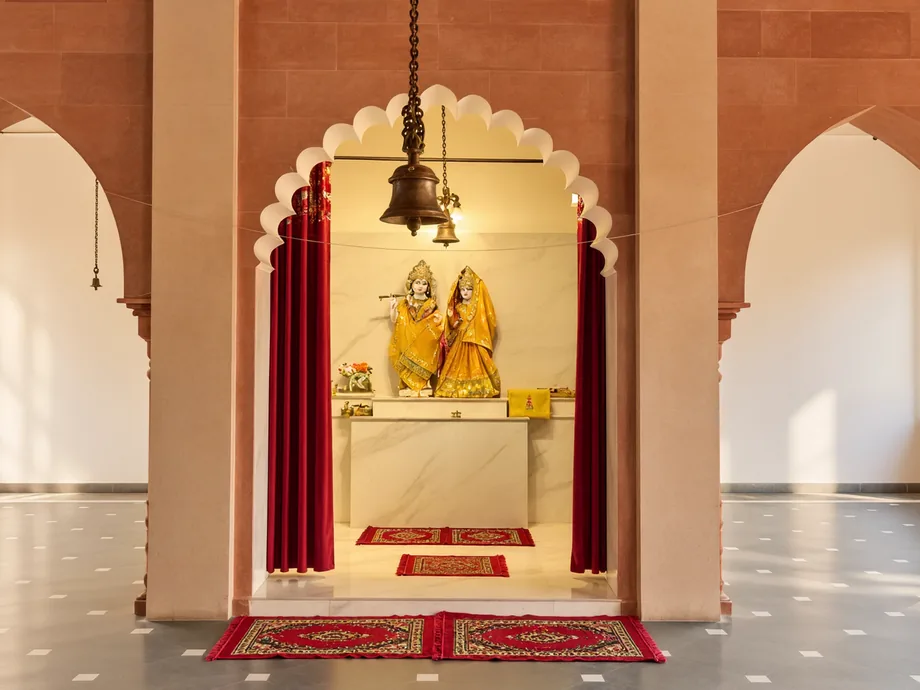
Shri Gopal Ji temple, at the heart of the gram
-
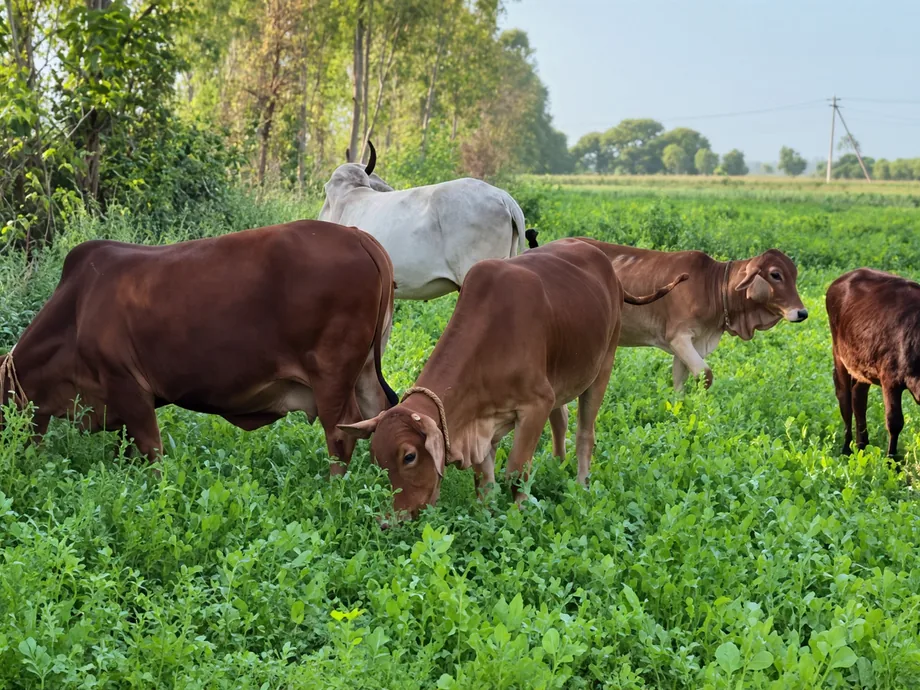
The herd out to graze
-
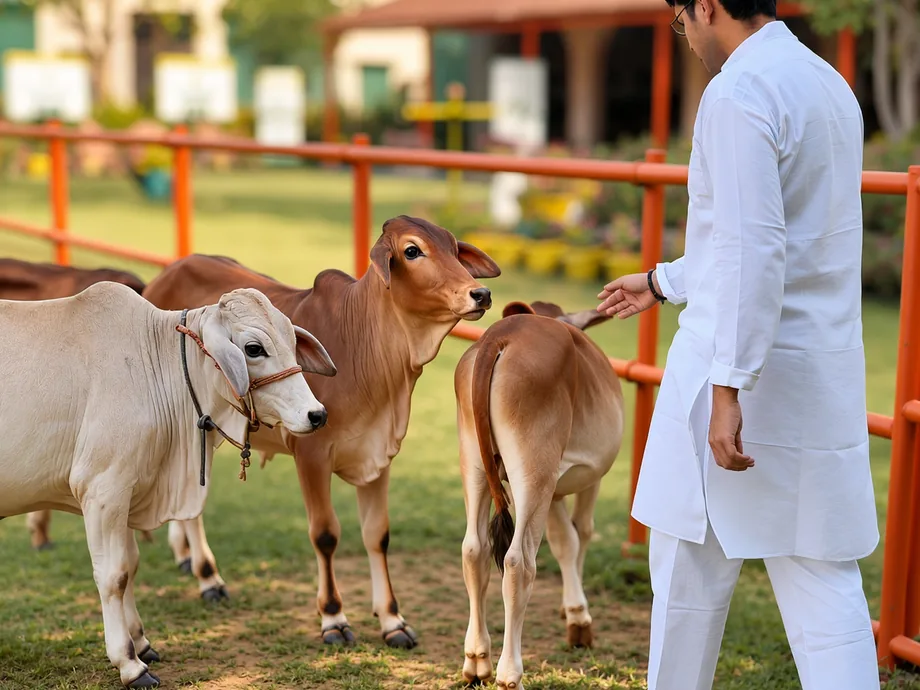
Calves at the gaushala
-

Radha and Krishna, dressed for the festival
-
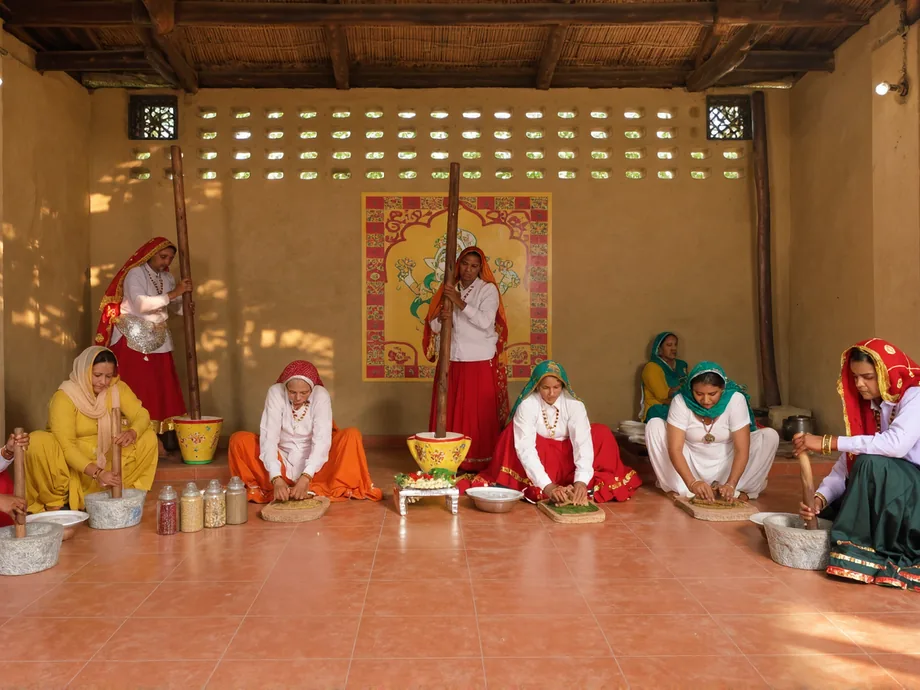
Women of the gram, grinding grain by hand
Tested, and the report is public
The third-party lab report for Pratapgarh Pure A2 Bilona Cow Ghee, exactly as it was issued.
Pratapgarh Pure A2 cow ghee is made from the milk of our own Sahiwal, Hariana and Gir cows — Indian breeds known for naturally rich and flavourful milk. Made from bilona churned makkhan at Pratapgarh Vedic Gau Gram, in limited batches. Deep gold in colour, soft and danedar. Open the jar and the warm familiar aroma comes to you first. Liquid gold as it melts on a hot roti.
Our cows. Our milk. Our ghee.
Pratapgarh Pure A2 cow ghee is ghee from A2 milk we produce ourselves. Sahiwal, Hariana and Gir cows are milked at the farm. That A2 milk goes to our own bilona — set to curd, churned into makkhan, and simmered slowly until it clears and turns liquid gold. Nothing is bought in, and no outside milk joins it.
A collection centre is where pooled milk of unknown origin changes hands — the one point where a jar can stop being what it says it is. Here, the cow and the bilona stand on the same farm.
A2 ghee, from cows we know by name
Every A2 cow on the farm has a name and a record: her dam, her date of birth, her line. Lakshami, Rani, Vrinda and Gauri each carry theirs. Rani’s grandmother Noori gave 41.08 kilos of milk in a day at her peak, and Rani’s line runs back through Noor and S-34. Knowing which cow gave the A2 milk in your jar is the difference between keeping a record and counting cattle.
This A2 desi cow ghee is soft and danedar — the grainy texture of real hand-churned ghee. It is the natural result of the bilona method rather than something added to imitate it. Open the jar and the warm, nutty aroma reaches you before the ghee touches the pan, from hours of slow simmering as the milk solids caramelise. On a hot roti it melts and disappears into the bread.
A2 Milk — The Asli Desi
Every drop of milk carries a protein called beta-casein, in two forms: A1 and A2. They differ at one spot, position 67. A2 holds proline; A1 holds histidine. A2 is the original form, what every cow gave until a mutation handed A1 to the European herds and breeding for yield spread it.
The Indian cow never lost it. India’s national genotyping programme tested over 1,500 cattle across 25 native breeds and found no A1 at all in the milch breeds — Sahiwal, Gir, Tharparkar, Rathi and Red Sindhi. This A2 milk ghee comes from three of those breeds, so the A2 in the jar rests on the animal it came from.
Made the bilona way, in five steps
- Boiling. A low flame and a slow boil, taking its time to bring out a deeper flavour.
- Curdling. A spoonful of our own curd starts it, and the milk is left undisturbed for hours to set into a thick, creamy curd.
- Churning. The wooden bilona turns slowly and steadily until the butter begins to gather.
- Separating. The makkhan is gathered by hand, and the buttermilk is saved.
- Heating. The makkhan is simmered gently until it turns clear, golden and fragrant. That is when it becomes ghee.
Sahiwal, Hariana and Gir: the breeds behind this A2 ghee
Sahiwal is the classic Indian dairy breed — deep red-brown and patient. Sahiwal cow ghee is prized for its fat. In a study of 328 Sahiwal cows at ICAR’s National Dairy Research Institute, the average day’s milk came to 6.6 kilos at 4.8% fat. Hariana cow ghee comes from a Haryana breed, from the Rohtak, Hisar and Gurgaon districts. She was kept for milk and for draft, which is why she was never pushed for volume.
Gir is the best known of the three — deep red, long ears, curved horns. Gir cow ghee is what the breed is famous for. Our Gir cows are fewer than the Sahiwal and the Hariana.
All three are indigenous, and all three give A2 milk by breed.
Why this A2 ghee costs what it does
The cost of this jar is the A2 milk in it, and that milk is our own. Sahiwal, Hariana and Gir are all indigenous breeds, and an indigenous cow gives a fraction of what a crossbred gives in a day.
How to use A2 ghee
A2 bilona ghee takes 245 to 250 °C before it smokes, and most cooking happens between 180 and 200, so it fries and tempers without scorching. Use it for dal and sabzi, roti and paratha, and the sweets the family asks for by name.
What is tested, and where
The milk is tested at our own lab before production begins, on thirteen parameters. The finished ghee goes to an independent lab, and that report is published.
Storing A2 ghee
Keep it in a cool, dark place with the lid closed, and take a dry spoon to the jar — water is the one thing that spoils ghee. A2 cow ghee melts at about 28 °C and sets in the low twenties, so a warm kitchen leaves it soft and a cold one firms it up.
Questions about this ghee
What is A2 ghee?
A2 ghee is made from the milk of a cow carrying the A2 form of beta-casein — the older form of the protein, and the one the Indian cow has always given. A1 arrived later, by mutation, with the imported dairy breeds. Ours is made from the milk of Sahiwal, Hariana and Gir cows.
Which cows does your A2 ghee come from?
Sahiwal, Hariana and Gir cows, raised on our own farm. Every cow carries her own record — her dam, her date of birth, her line — so the milk in your jar can be traced back to the animal it came from.
Is the milk really from your own cows?
Yes. Our Sahiwal, Hariana and Gir cows are milked at the farm, and that milk goes straight to our own bilona. Nothing is bought in and no outside milk joins it. There is no collection centre in between, which is the point in the chain where a jar can stop being what it says it is.
How is A2 bilona ghee made?
The milk is boiled slowly and set with a spoon of curd, then left overnight. The curd is churned in a wooden bilona until the makkhan separates. The makkhan is simmered gently until the water is gone and the ghee is clear. On this jar, all of it happens at the farm.
Is the milk tested?
Yes. The milk is tested at our own lab at the farm before production begins, on thirteen parameters. The finished ghee also goes to an independent lab, and that report is published on our lab reports page.
Why does A2 ghee cost what it does?
Two reasons, and both are the cow. The milk is our own rather than bought in, and Sahiwal, Hariana and Gir are indigenous breeds that give a fraction of what a crossbred gives in a day. A litre of ghee takes about thirty litres of that milk.
What does A2 ghee taste like?
Deep gold in colour, soft and danedar in texture, with a warm, nutty aroma the moment the jar is opened. On a hot roti it melts and disappears into the bread.
How can I tell real A2 ghee?
Not by taste, smell or colour — A2 sits in a protein, and no nose finds it. What can be checked is the animal: which breed gave the milk, who owns the cows, and whether the milk left the farm on the way to the churn. Those three are the whole of the A2 question.
Is A2 ghee good for cooking?
It is made for it. Ghee takes 245 to 250 °C before it smokes, and most cooking happens between 180 and 200, so it fries and tempers without scorching. It carries aroma through a dish, which is why a spoon of it changes a dal.
Why is my ghee hard in winter and soft in summer?
Because it is cow ghee and it answers to the room. Cow ghee melts at about 28 °C and sets in the low twenties, so a warm kitchen leaves it soft and a cold one firms it up. It is the milk, not a fault.
How should I store A2 ghee?
Keep it in a cool, dark place. A grainy texture in cold weather is normal and is a sign of pure ghee, not spoilage.
How long does A2 ghee last?
A year at room temperature. Ghee is almost entirely fat with barely any moisture, which is what gives it that keeping.
What does 1 litre of A2 ghee cost?
₹2,599 for one litre in an airtight glass jar, with free shipping anywhere in India.
The other two ghees
The difference is the milk, not the craft.

