

Pratapgarh Pure Bilona Cow Ghee
Pratapgarh Pure Bilona Cow Ghee offers a rich taste and the familiar warm aroma that fills your kitchen the moment you open the golden jar. Soft and danedar, it melts the moment it meets a hot roti. Made from makkhan, just like how your dadi made it. It comes to your kitchen from the fields of Haryana. The everyday ghee for your family.
₹1,640
- 4.8 from 30,516 Google reviews at our farm
- Proudly served to G20 Delegates
- Pratapgarh — 18+ years of trust
- Made at Pratapgarh Vedic Gau Gram
- Authentic Bilona Method
- Made from Makkhan
- Lab-tested Milk
- Made at Pratapgarh Vedic Gau Gram
Pure ghee. Made from makkhan.
Cultured and churned by hand at Pratapgarh Farms, then simmered slowly in small batches. One ingredient. A slow simmer. That is the whole of it. You will know within a breath of opening it: the aroma is warm and nutty, and the room fills before the spoon does. Golden and danedar underneath. Your kitchen will remember.
Pure cow ghee, in every jar
-

The Ghee Is Only as Good as the Makkhan.
Fresh makkhan (butter), made at the farm, goes into every batch of our ghee. Freshness matters. It preserves the natural richness of the milk and gives the finished ghee its deep aroma, rich taste, and beautiful character.
-

Asli ghee, asli texture
Pratapgarh Pure bilona cow ghee has that soft, grainy texture you get only in real homemade ghee. Our danedar texture is the natural result of the bilona method. It is exactly how your grandmother made it — we simply have not changed a thing.
-

The rich aroma of pure ghee
The moment you open the lid, the deep, nutty aroma takes you back to your Nani's kitchen. That warm, rich and intensely familiar aroma develops as we simmer the ghee for hours, until the milk solids caramelise.
-

Real ghee, real taste
This is the taste you remember from childhood — the kind that made a simple bowl of halwa or a plate of ladoos disappear before it reached the table. It comes from milk that is naturally rich and pure. The taste carries its own depth: slightly nutty, deeply comforting, unmistakably real.
Cow ghee, up close
3000 years old. The benefits are not a recent discovery. Across eleven classical Ayurvedic texts — three thousand years of writing — no food is mentioned more.
Four vitamins. A, D, E and K — the four that dissolve only in fat. Ghee carries all four. The usual cooking oil carries none.
Cognition. The oldest medical tradition in the world records ghee for memory, intellect and clarity, and has used it for the mind for three thousand years. The mind is the first thing they go to ghee for.
CLA & butyric. Not every fat does something. Butyric acid is the one your gut already knows — it is what butterfat is built on, and ghee carries it. CLA is the other, and the old slow method is what raises it.
High smoke point. Turn the flame up. Ghee takes 245 to 250 °C before it smokes, a good fifty above the hottest frying most kitchens do. Your tadka browns. It does not scorch.
Composition data and traditional record: Kumar & Jadhav, Frontiers in Food Science and Technology, 2026; Devaraji, Ravikumar, Yokesh, Sathish Kumar & Jalaniy, International Journal of Ayurvedic Medicine, 2024
Why we still make ghee with the bilona
High-pressure steam, industrial cream and a centrifuge can turn out a thousand litres an hour. It is efficient. It is fast. And it is utterly lifeless. We choose the harder way, starting with curd, because that is where the soul of the flavour begins.
Bilona Panch Sanskar
Pratapgarh Pure Ghee is made in 5 steps following the centuries old Vedic process.

01
Boiling
A low flame. A slow boil. Just gentle heat, taking its time to bring out a richer, deeper flavour.

02
Curdling
A spoonful of our own curd starts it. For hours, left undisturbed to set slowly and naturally into a curd that is thick, creamy and full of nutrition.

03
Churning
The wooden bilona turns, slowly and steadily. You can hear the gentle slosh of buttermilk, as the butter starts to gather.

04
Separating
The butter is gathered gently. And the buttermilk is saved to be served to our guests. Because here, nothing good goes to waste.

05
Heating
The butter is simmered gently. Until it turns clear, golden and fragrant — with that warm, nutty aroma you know before you taste it. That's when it becomes ghee.
At the farm
The same ghee served at Pratapgarh Farms.
Fresh white makkhan is churned at the farm and served with bajre ki roti — and the ghee served with it is this ghee, made from that same makkhan. Everyone who comes to the farm loves it. So will you.
Made in small batches
-
Enhanced quality control
Every step of the process is carefully monitored and controlled, which is what maintains consistent quality.
-
Freshness guaranteed
Small batch production means the ghee is made frequently and in limited quantities, so it reaches you at its freshest.
-
Personalised attention
Each jar receives a level of attention that mass production simply cannot match.
-
Sustainability
Small batch production uses resources more efficiently and reduces waste.
The farm
Where the morning starts with a havan
At Pratapgarh Vedic Gau Gram, morning doesn’t start with a clock. It starts with a havan.
Gaupals serve cows the Vedic way—ritual, care, and compassion before all else. At its heart stands the grand Shri Gopal ji temple.
Pratapgarh Vedic Gau Gram. Here, cows are not just raised. They are cared for with utmost passion.
-

Shri Gopal Ji temple, at the heart of the gram
-
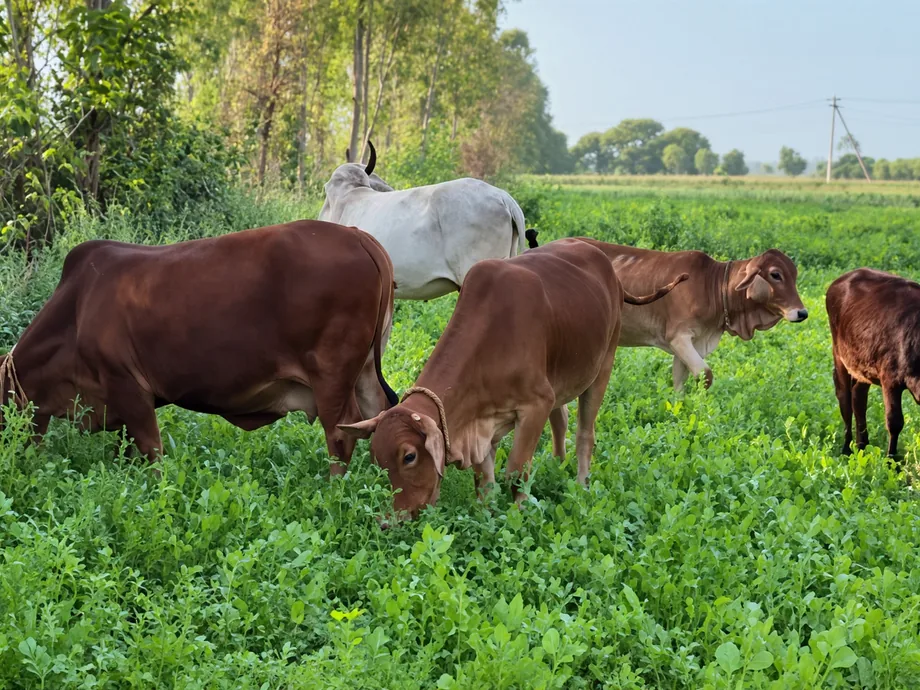
The herd out to graze
-
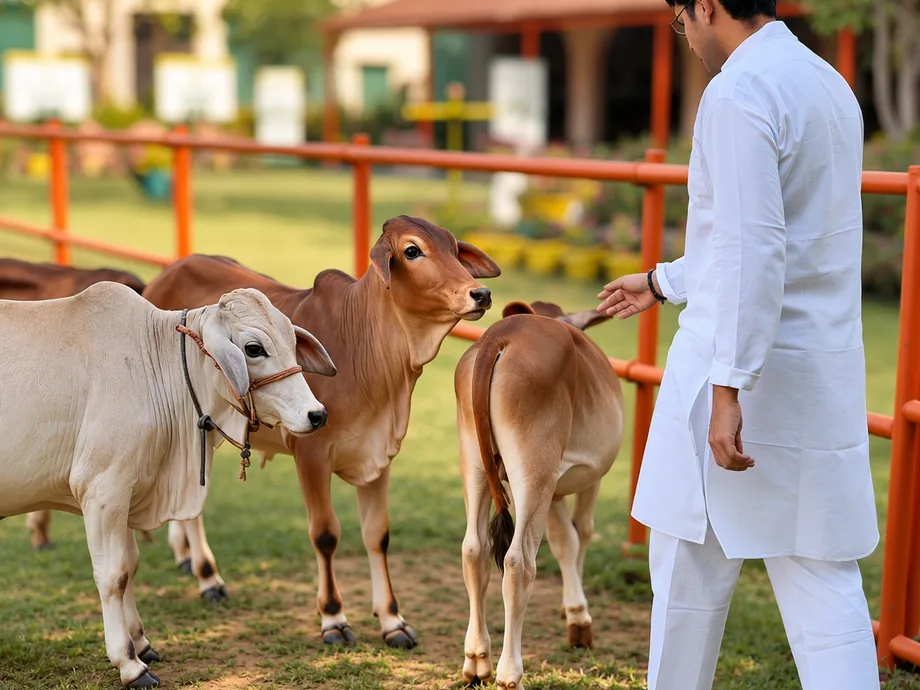
Calves at the gaushala
-

Radha and Krishna, dressed for the festival
-
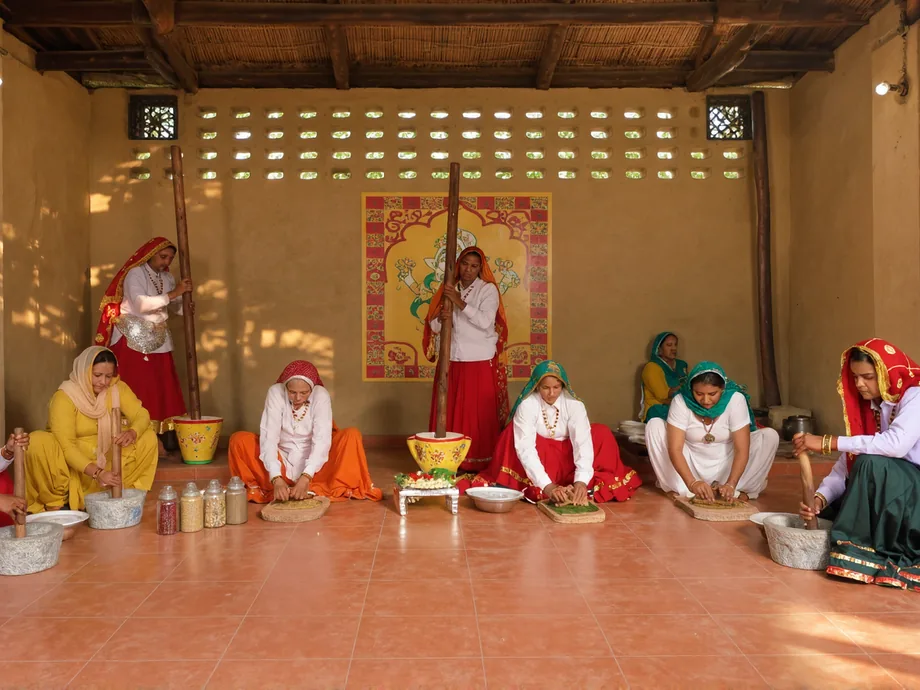
Women of the gram, grinding grain by hand
Tested, and the report is public
The third-party lab report for Pratapgarh Pure Bilona Cow Ghee, exactly as it was issued.
Pratapgarh Pure Bilona Cow Ghee offers a rich taste and the familiar warm aroma that fills your kitchen the moment you open the golden jar. Soft and danedar, it melts the moment it meets a hot roti. Made from makkhan, just like how your dadi made it. It comes to your kitchen from the fields of Haryana. The everyday ghee for your family.
Pure ghee. Made from makkhan.
Pratapgarh Pure Bilona Cow Ghee is cultured and churned by hand at the farm, then simmered slowly in small batches. One ingredient, and one slow simmer. This is desi cow ghee made the bilona way — from curd, not from cream — and the difference is there the moment the lid comes off.
Pure cow ghee, in every jar
The ghee is only as good as the makkhan it comes from. Fresh makkhan is made at the farm and goes straight into the ghee, and that freshness is what carries the natural richness of the milk through to the jar.
The danedar grain is the natural result of the bilona method rather than something added to imitate it. The deep, nutty aroma develops over hours of simmering, as the milk solids caramelise. And the taste carries its own depth — slightly nutty, deeply comforting. It is the kind that makes a bowl of halwa or a plate of ladoos disappear before it reaches the table.
Cow ghee, up close
Cow ghee is not a recent discovery. Across eleven classical Ayurvedic texts — three thousand years of writing — no food is mentioned more.
The fat carries the four vitamins that dissolve only in fat: A, D, E and K. Butyric acid is what butterfat is built on, and ghee carries it; CLA is the other, and the old slow method is what raises it. Turn the flame up. Cow ghee takes 245 to 250 °C before it smokes, a good fifty above the hottest frying most kitchens do, so the tadka browns and does not scorch.
Made the bilona way, in five steps
- Boiling. A low flame and a slow boil, taking its time to bring out a deeper flavour.
- Curdling. A spoonful of our own curd starts it, and the milk is left undisturbed for hours to set into a thick, creamy curd.
- Churning. The wooden bilona turns slowly and steadily until the butter begins to gather.
- Separating. The makkhan is gathered by hand, and the buttermilk is saved.
- Heating. The makkhan is simmered gently until it turns clear, golden and fragrant. That is when it becomes ghee.
How to use desi cow ghee
This is the everyday ghee. Use it for dal and sabzi, roti and paratha, khichdi and pulao, and for the sweets the family asks for by name. A spoon of it changes a dal. It is also the ghee served at Pratapgarh Farms, with bajre ki roti.
How to tell good desi cow ghee
You already have the instruments, and they are the ones worth trusting. The nose is the first test and the cheapest: real ghee announces itself warm and nutty as soon as the lid comes off. Then the look — desi cow ghee is deep gold because cow’s milk carries carotene, and the colour runs even through the jar. Then the grain: danedar means grain you can see, and a spoon that comes up coated rather than slick. Then the melt. A little on your finger softens almost at once, and on a hot roti it disappears into the bread rather than sitting on top of it.
What is tested, and where
The milk is tested at our own lab at the farm before production begins, on thirteen parameters. The finished ghee also goes to an independent lab, and that report is published for you to read.
Storing cow ghee
Keep it in a cool, dark place with the lid closed, and take a dry spoon to the jar — water is the one thing that spoils ghee. A grainy texture in cold weather is normal. Cow ghee melts at about 28 °C and sets in the low twenties, so a warm kitchen leaves it soft and a cold one firms it up. Kept this way, a jar lasts a year at room temperature.
Questions about this ghee
What is desi bilona cow ghee?
Ghee made from cow’s milk, churned from curd in a wooden bilona and simmered until it clears. Ours is made from makkhan at the farm — no cream separator and no centrifuge.
How is bilona ghee made?
Milk is boiled slowly and set with a spoon of curd, then left overnight. The curd is churned in a wooden bilona until the makkhan separates. The makkhan is simmered gently until the water is gone and the ghee is clear. That is the whole method.
What does danedar mean?
Danedar is the grainy texture of real homemade ghee. Ours is the natural result of the bilona method rather than something added to imitate it.
How can I tell if ghee is pure?
Open the lid and smell it. Real ghee is warm and nutty straight away, without your having to hunt for it. Then look for the deep gold colour of cow ghee and the danedar grain, and put a little on your finger: it should soften at once. To test a jar that is not ours, shake 1 ml of melted ghee with 1 ml of concentrated hydrochloric acid and half a teaspoon of sugar; no colour change means no vanaspati. Iodine drops turn purple or blue if starch has been added. The acid is corrosive, so handle it with care or let a lab run it.
Why is my ghee hard in winter and soft in summer?
Because it is cow ghee and it answers to the room. Cow ghee melts at about 28 °C and sets in the low twenties, so a warm kitchen leaves it soft and a cold one firms it up. It is the milk, not a fault.
Why does the colour or texture change between jars?
The grain is the fat crystallising as it cools, so it follows the weather and how slowly that batch cooled. Ghee churned by hand varies a little from jar to jar. One that never varied would be the one to ask about.
Is desi cow ghee good for cooking?
It is made for it. Ghee takes 245 to 250 °C before it smokes, and most cooking happens between 180 and 200, so it fries and tempers without scorching. It carries aroma through a dish, which is why a spoon of it changes a dal.
What is desi bilona cow ghee best for?
Everyday cooking, mostly: dal and sabzi, roti and paratha, khichdi and pulao, and the tadka that starts them. It is just as good for halwa and ladoo, and for anything you fry.
How should I store ghee?
Keep it in a cool, dark place. A grainy texture in cold weather is normal and is a sign of pure ghee, not spoilage.
How long does ghee last?
A year at room temperature. Ghee is almost entirely fat with barely any moisture, which is what gives it that keeping.
Who makes this ghee?
Local Haryanvi women work the bilona, and ex-servicemen supervise every batch. It is made in small batches at Pratapgarh Farms, Jhajjar, Haryana, which has been running since 2008.
What does 1 litre of desi cow ghee cost?
₹1,640 for one litre in an airtight glass jar, with free shipping anywhere in India.
Which of the three ghees should I choose?
Desi cow, A2 bilona cow and Murrah buffalo. The difference is the milk, not the craft — the method is the same for all three.
The other two ghees
The difference is the milk, not the craft.

