
Buffalo, Cow or A2 Ghee: What Actually Differs, and Which to Buy

By Prateek Singh · Pratapgarh Vedic Gau Gram
Buffalo ghee, cow ghee and A2 ghee are made the same way in the same kitchen. What differs is the milk: Murrah buffalo, desi cow, and the milk of our own Sahiwal, Hariana and Gir cows. One litre is ₹1,205, ₹1,640 and ₹2,599.
The craft stays the same across all three. The animal changes four things: how the ghee tastes, how it behaves in the pan, how it sets in the jar, and which one Ayurveda keeps for daily cooking. Buffalo ghee is the everyday frying jar. Cow ghee is the one the tradition cooks with. A2 cow ghee is that same cow ghee from cows we keep.
Which one should you buy?
If you fry, temper and finish rotis every day, take the buffalo jar. Murrah milk is the richest of the three, the jar sets firm, and it holds its heat through a tadka.
If flavour is what you are buying ghee for, take the cow jar. Cow milk carries the fuller, rounder aroma, the jar grains as it sets, and in the pan it fills the kitchen.
If where the milk came from is the point, take the A2 jar. The same ghee as the cow jar, from cows we keep, every one of them recorded.
The three, side by side
| Murrah buffalo | Cow | A2 cow | |
|---|---|---|---|
| Aroma | bold and creamy | the aroma people mean when they say ghee | the same aroma, from a named herd |
| Taste | creamy and direct | full and round | as the cow jar |
| In the pan | generous, and it lets the dish lead | the kitchen fills with it | as the cow jar |
| In the jar | firm, and a little finer | grains as it sets, firmer in winter | as the cow jar |
| Ayurveda keeps it for | a cooling quality; heavy to digest, increasing Kapha | daily use, the tradition’s default ghee | as the cow jar |
| Milk from | Murrah buffalo | cow | our own Sahiwal, Hariana and Gir cows |
| Price, 1 L | ₹1,205 | ₹1,640 | ₹2,599 |
| Colour | white | golden | golden |
Prices as at October 2026. Every jar is one litre, in an airtight glass jar, with free shipping anywhere in India.
Buffalo ghee, at ₹1,205
Made from the milk of Murrah buffalo, the richest milk of the three.
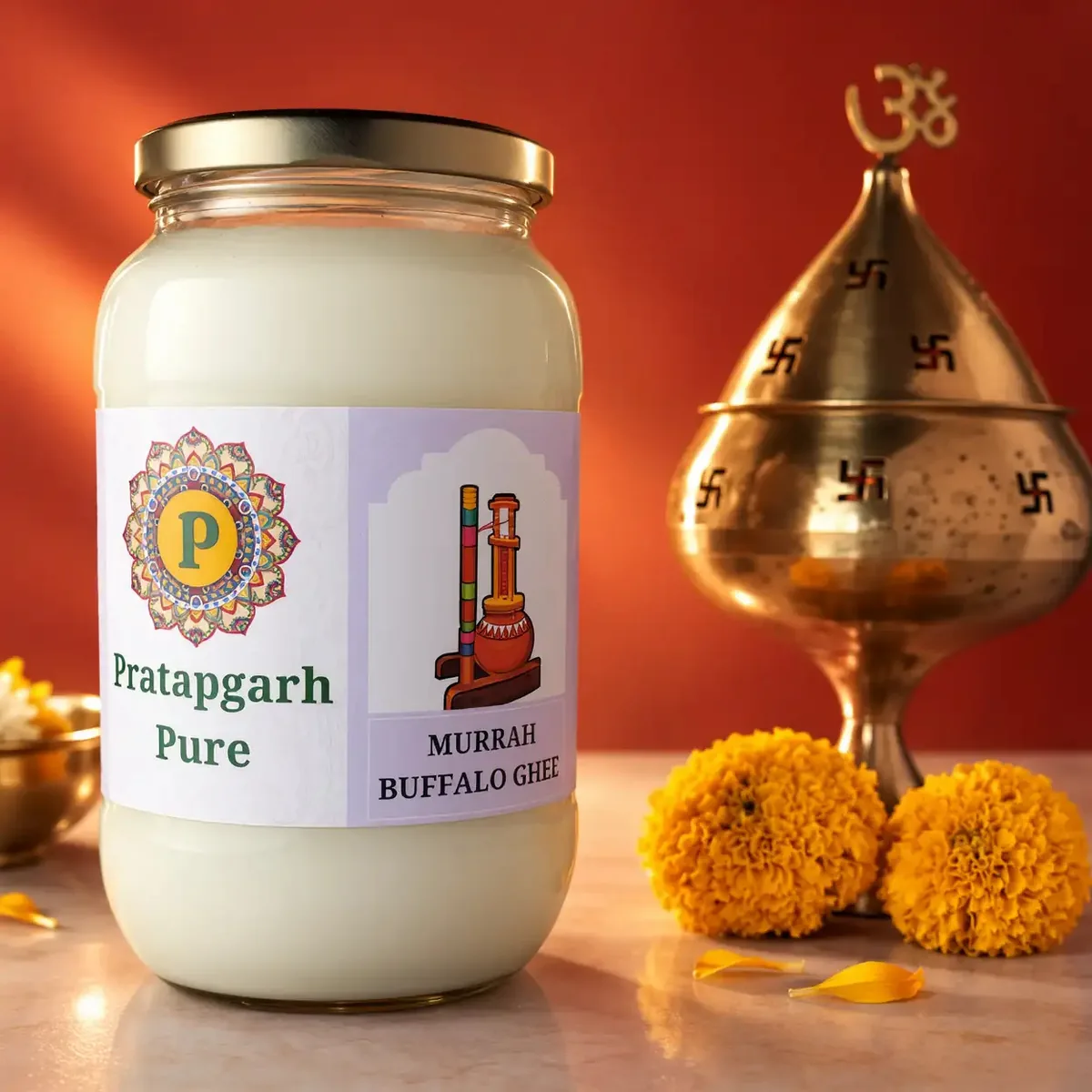
Open the jar and the aroma arrives bold and creamy, before the spoon is in. In the mouth it is direct and generous, creamy at the front, and it finishes clean. Set in the jar it goes firm and a little finer than cow ghee, so the spoon takes a solid edge.
In a hot pan it holds its heat, it browns a tadka at a steady temperature, and it stays underneath the dish, so the dal still tastes of dal. That is the jar most of our regulars keep for the everyday work: frying, tempering, and the spoon that goes over the roti at the end of the day.
Cow ghee, at ₹1,640
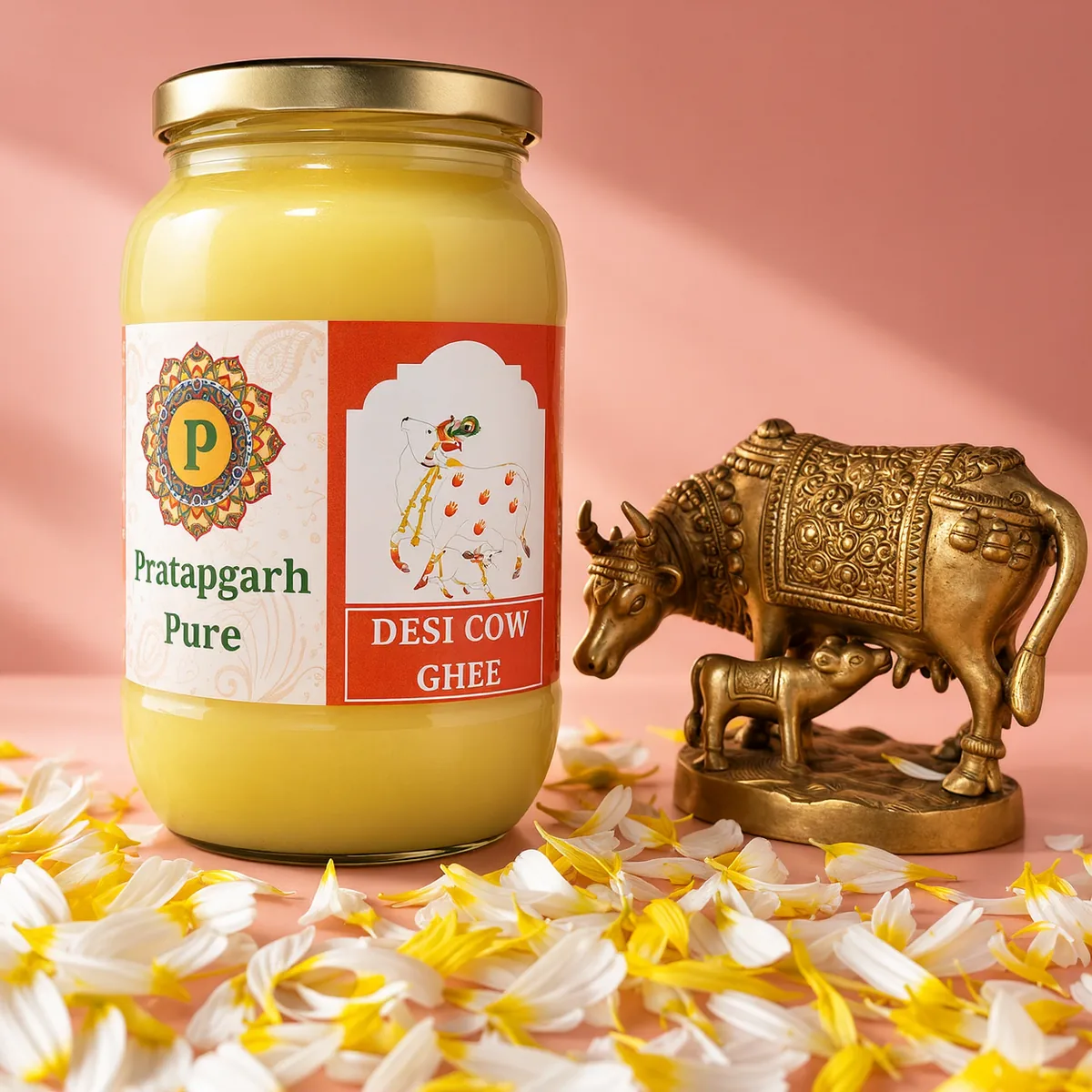
This is the jar people are picturing when they say ghee. Warm, nutty, and it keeps opening as it warms: nut first, then caramel, then cream, and the aroma stays in the kitchen long after the pan is off the flame.
In the jar it takes a grain, the danedar look, a texture you can see when a spoon goes through it. In the pan it is full and round, and the kitchen fills with it. On a hot roti it sinks into the bread.
It is the jar for cooking where the ghee is part of the dish: dal finished at the end, a spoon folded into a sabzi, a stack of parathas, a halwa that has to taste of something.
A2 cow ghee, at ₹2,599
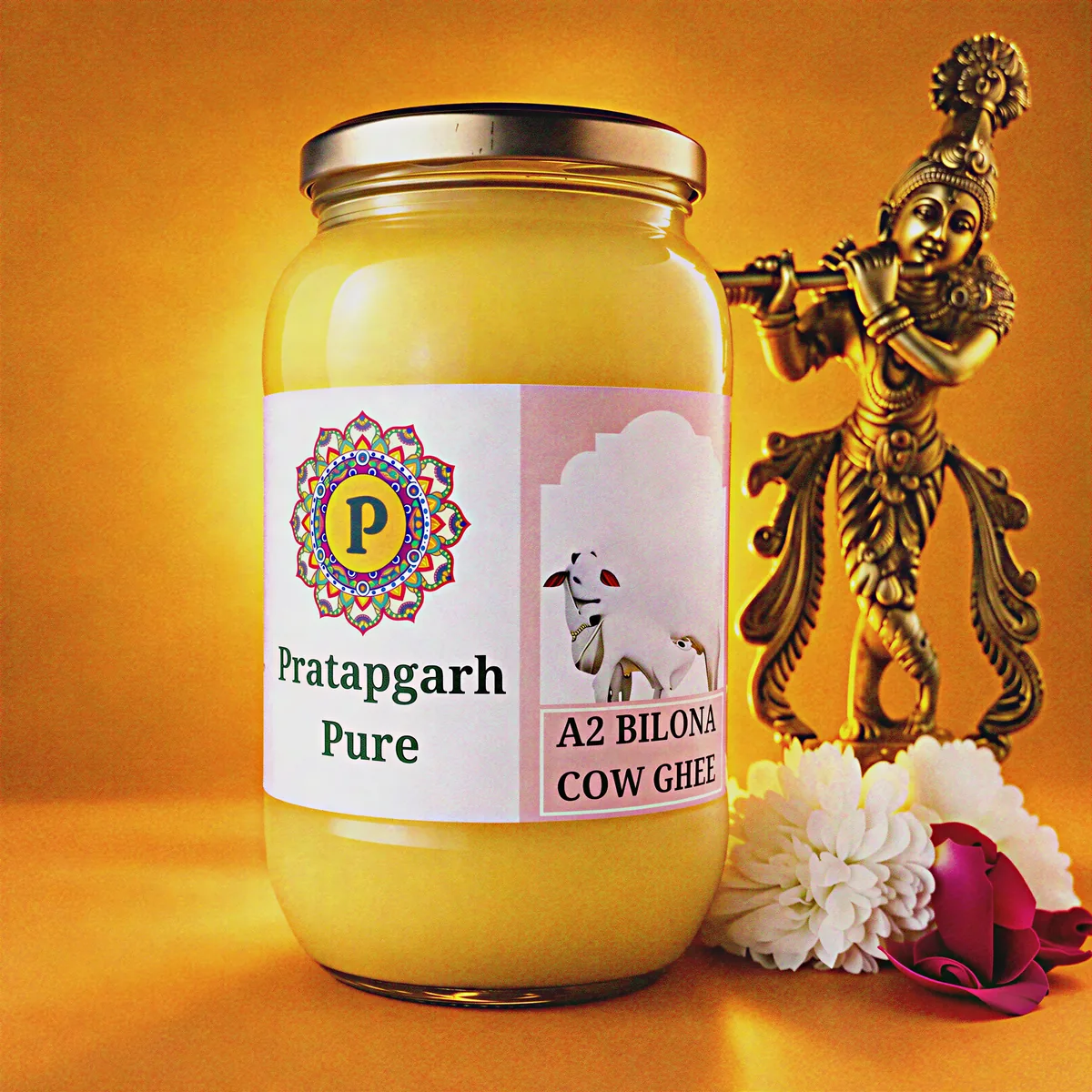
A2 is a statement about the animal, not about the method. It describes a variant of the beta-casein protein in the milk, one amino acid in one protein, and it is a property of the breed that gave the milk.
This jar comes from Sahiwal, Hariana and Gir cows, three indigenous breeds, all of them ours. Every cow has a record holding her dam and her date of birth. It is the only jar on this site whose milk goes from the cow to the pan without leaving the farm: what reaches the pan is milk from animals we can walk up to and name the breed of.
In the jar it is the cow jar. Same grain, same aroma, same behaviour in the pan. What changes is the length of the supply chain behind it.
What Ayurveda keeps each jar for
The classical texts draw a distinction between these ghee, and it is the one most pages leave out.
Cow ghee is the ghee of the tradition. Sushruta describes its qualities as excellent, and the tradition associates cow ghee with strength and with vision. That is why it holds the place it does in Ayurvedic cooking and in medicinal preparations: it is the default ghee of the tradition.
Buffalo ghee has its own account. Sushruta, Sutra Sthana 45.99, describes Mahisha Ghrita, buffalo ghee, as sweet, very cooling, heavy to digest, pacifying Vata and Pitta, and increasing Kapha. Those are the properties the tradition works with, and it reaches for buffalo ghee for exactly those.
So the tradition’s answer to which ghee for daily cooking is cow ghee, and its answer to which ghee when a cooling quality is wanted is buffalo. Both statements sit inside the Ayurvedic account, and each jar has its place in it.
What the texts actually say, with chapter and verse, is set out on its own page.
What the ₹959 buys
The A2 jar costs ₹959 more than the cow jar. Here is where that money goes.
The herd. Sahiwal, Hariana and Gir are indigenous breeds, and indigenous cows give a fraction of the milk a crossbred gives. The same acre and the same day produce far less.
The trace. The A2 milk is our own, from animals we keep, and each of them has a record of her dam and her date of birth. Every drop comes from cows we have raised.
The choice. Three breeds, each named, and the milk of cows we can walk up to.
So the extra money buys provenance. The buffalo jar is ₹1,205 and does the everyday work. The A2 jar is the milk of one herd on one farm. Both answers are honest.
What all three share
One kitchen, one wooden bilona, one slow simmer. Every jar starts as milk, is boiled and set into curd, is churned by hand until the makkhan rises, and is then simmered until the solids colour and are strained away. The ingredient list is one word long, whichever of the three you open.
One kilo of cow ghee takes about thirty litres of milk. Our lab tests the milk on 13 parameters before the pan, a third-party lab tests the finished ghee, and the reports are published.
The kitchen sits on the farm, thirty-five acres worked since 2008, and the farm is open. We served this ghee to G20 delegates. 30,000+ Google reviews at our farm. We took the Big FM Big Impact Creator Award in 2024, 2025 and 2026.
What you can check for yourself
Here is what you can hold up to the light on the A2 jar, and where to look.
The breeds. Sahiwal, Hariana and Gir are distinguishable by looking at the animal. There are photographs of the herd on this site, and the animals are on the farm.
The record. Every A2 cow has a lineage record holding her dam and her date of birth. It is a written record, kept at the farm, and it makes A2 a claim about a particular animal, written down at the farm.
The tests. The milk report and the ghee report are on the site. Read them before you order.
The farm. The kitchen is on it and the herd is on it, and people come out through the year.
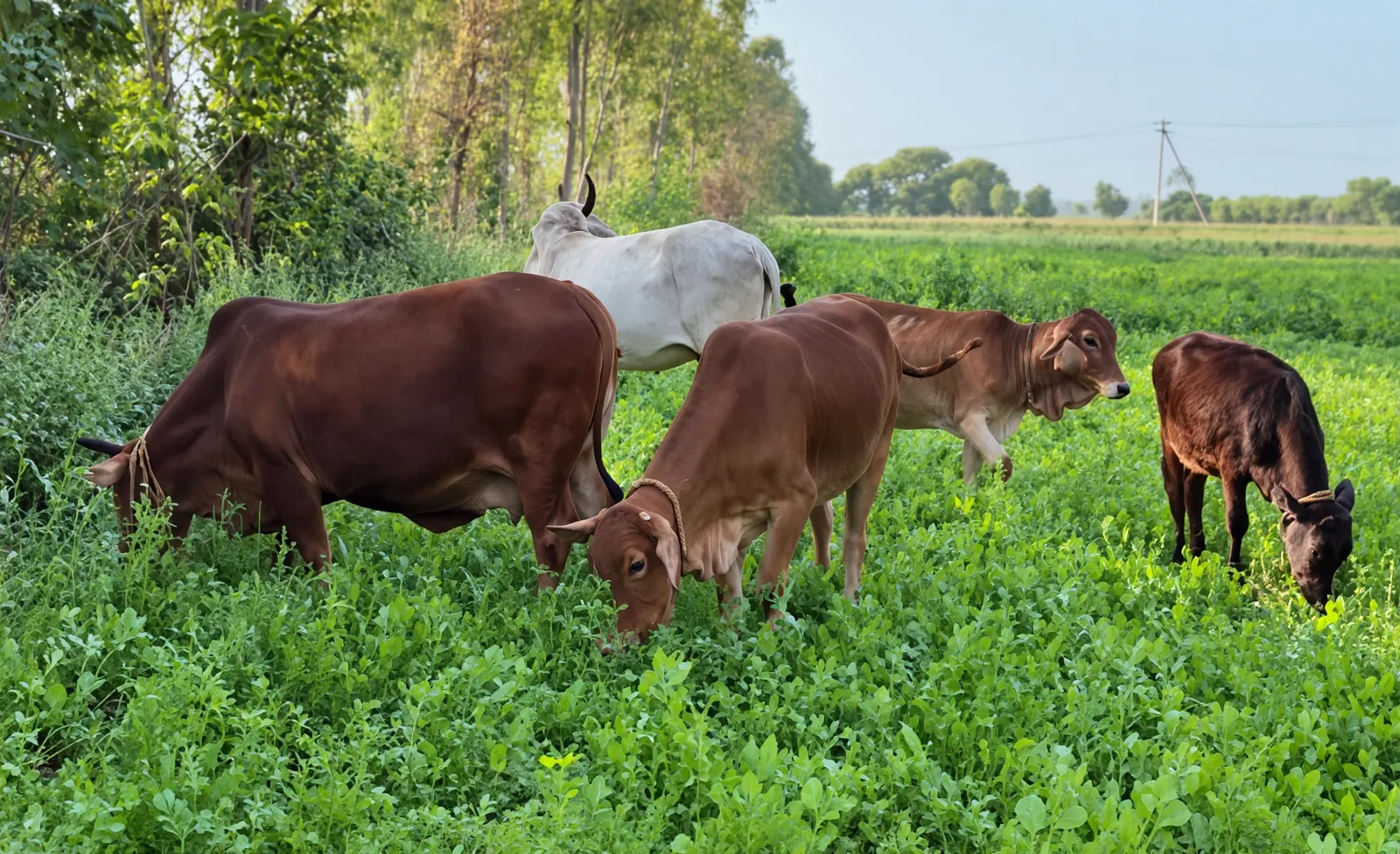
You can walk up to this one.
Questions people ask
Is buffalo ghee better than cow ghee?
They are different milks. Buffalo ghee sets firm and carries a bolder, creamier aroma. Cow ghee carries the fuller aroma most people mean when they say ghee. What you are cooking decides which one you want.
Which ghee should I cook with every day?
Buffalo ghee for frying and tempering, and it is the jar at ₹1,205. Cow ghee where the ghee is part of the dish, and if the Ayurvedic tradition’s answer matters to you, since it keeps cow ghee for daily use.
What does Ayurveda say about buffalo ghee?
Sushruta, Sutra Sthana 45.99, describes buffalo ghee as sweet, very cooling, heavy to digest, pacifying Vata and Pitta, and increasing Kapha. Those are the properties the tradition works with, and they are why buffalo ghee is reached for when a cooling quality is wanted.
Why is buffalo ghee white and cow ghee golden?
Carotene. Cow’s milk carries it and buffalo milk does not, so cow ghee comes out gold and buffalo ghee comes out white and stays white when it melts. Colour tells you which animal the milk came from.
Is A2 ghee worth the extra money?
It buys provenance. The milk is our own, from Sahiwal, Hariana and Gir cows we keep, and each of them has a record of her dam and her date of birth. If the farm and the traceability matter to you, it is worth the ₹959. The buffalo jar at ₹1,205 is the everyday one.
Does buffalo ghee taste different from cow ghee?
Yes, and the difference is the milk. The buffalo jar reads bolder and creamier. The cow jars read fuller and rounder. Both are the same ghee through the same five stages.
Can I cook with A2 ghee, or is it only for eating?
Cook with it any day of the week. It is the same ghee through the same five stages, and it behaves in a pan the way the cow jar does.
The range
All three are one litre, made this way in our own kitchen at the farm: Murrah buffalo, cow, and A2 cow. We dispatch in one working day, delivery is 1 to 3 days door to door, shipping is free, and cash on delivery is available.


